I took a short retreat after finals, just a drive over to the beach. It was cool and breezy, almost empty. I sat for a while, and a fat little seagull waddled over and settled beside me like we were old friends. We watched the waves together. Something in me, the clenched part of my mind, my breath, my shoulders, started to loosen. It reminded me of shaking a tangled strand of Christmas lights and suddenly feeling them fall loose, a little at a time.
As I sat and then walked, I felt gratitude and awe at the beauty of God before me, the sunlight on the water, the sound of the waves, the breeze on my face. And almost immediately, the accusing voices came:
“Are you just seeking a feeling?”
“What gives you the right to walk the beach while others need help?”
“Shouldn’t you be doing more?”
“Are you doing enough?”
I felt split. One part awed by beauty, the other shaken by years of absorbing sermons about vigilance and ceaseless striving. How could I possibly rest when the world is broken? Jesus did not even have a place to lay His head, so who am I to sit in warm sunlight with a cool breeze?
In that moment on the beach, something familiar surfaced, something I have been wrestling with for a while (if you’ve read my blog for any length of time, this is nothing new!). It brought up the question that feels so familiar to me and to so many others I know: How do I know if I am doing enough?
Even as I write that, I realize this question stretches far beyond Christianity. I have friends who do not use spiritual language at all, yet they speak in the same exhausted words, wondering why they always feel behind, inadequate, or not enough. It is a very human ache, this sense that our worth is fragile and must be proven.
I hear it in the voices of people I love, people who are quietly showing up faithfully in the ways only they can. And every time I hear it, something in me longs to reassure them that it is not about doing enough. But even as I speak those words to them, I know I am guilty of the same fear. I hustle around, looking for the next thing to do, wondering if some invisible standard is slipping through my fingers.
It is strange. As Christians we talk about rest almost romantically. Recently, the topic has almost become a trend in Christian circles. We praise Sabbath in theory, we post about slowing down, we encourage quiet time. Yet our lives tell a different story. So much of our church culture runs on the assumption that what matters most is what we produce, the ministry output, the emotional labor, the visible fruit. We teach grace and then live as if God is mostly concerned with our spiritual efficiency.
Sometimes even Sabbath becomes another task on the list, something we practice in order to feel like we are doing enough. But Sabbath is not meant to be a spiritual accomplishment. It is meant to teach our hearts how to be at peace in the presence of God. If Sabbath does not lead us to that place, then it becomes another thing we use to measure ourselves. I often wonder what would happen if everything were stripped from us, every title, every role, every identity we cling to. Could we sit with God alone and be at peace, or would we still search for proof that we are worth loving?
Biblically, stepping away to rest was always part of the plan, even the beginning of the plan. In Genesis, God rests not when everything is flawless but when creation is simply called “good.” Not perfect. Not complete. Good. There were still wild places, untended ground, work left to do, and yet God rests anyway. Rest was not a reward for finishing. It was an expression of relationship. God rested in the midst of goodness, not after perfection.
We see this same approach to rest in the Jewish calendar. The Jewish day began at sundown, not at sunrise, which meant the first act of every new day was rest. Their days started with trust rather than striving. Even for those who do not think about life in spiritual categories, there is something striking about the idea of beginning a day with rest rather than anxiety, beginning with settling rather than performing. It is a rhythm most of us are not used to.
When I place those rhythms beside my own resistance to retreat and rest, I see how deeply I have internalized the idea that rest must be earned. That God’s pleasure comes after productivity. And yet Scripture seems to tell a different story entirely.
Even so, it is hard to let go of the internal voice that says doing is priority. If I look at Jesus, His sacrifice and His generosity, it is easy to feel pressure. Paul writes about running the race and pressing on. It is easy to read all of that through the lens of performance, as if faithfulness can be measured by how depleted we are. But the deeper problem is that the question of doing enough assumes something untrue, that God’s primary relationship to us is evaluative, as if He stands with a clipboard assessing our performance. The question leans toward fear rather than love. And fear, as John reminds us, is tied to punishment. Perfect love casts it out.
When I got home from the beach, I tried to explain all of this to Alex. He listened and said something simple that helped lift the weight. “It is like marriage,” he said. “We do life together, tasks, responsibilities, all of it. But the moments that strengthen us most are not always the productive ones. Sometimes it is just being together, not doing anything, seeing each other again.”
And it clicked. If that is true in marriage, why not with God?
There are things we do because we love Him, yes. But the foundation of the relationship is not the doing. It is the being together, the stillness that lets us be known, the quiet that gives us room to breathe. Jesus withdrew so often the Gospels mention it casually, as if slipping away to rest was simply part of His normal rhythm. He left people unhealed. He walked away from crowds. He disappointed expectations. He did not cram every moment with usefulness. He made space for intimacy with the Father.
Maybe the problem is not whether we are doing enough. Maybe the problem is that we are asking a question God never asked us to ask.
When Jesus talks about fruit, He begins with abiding. Roots first, fruit second. And the fruit of the Spirit, love, joy, peace, patience, all of them grow from presence rather than productivity. It is possible to do a great deal for God and be far from Him. It is possible to do less and be deeply rooted.
So maybe the better question is: Am I drawing close enough to God that what I do flows from abundance rather than fear?
If I am to err in a direction, maybe the holier error is to lean toward delight.
Rest might not always feel spiritual. I know what it is like to sit in a quiet space and feel far from God, to hope for closeness and feel nothing. But even in marriage, not every moment away together is emotionally groundbreaking. Rest is not a lever you pull. It is more like making room, unrushed and unproductive room, for God to meet you as He chooses. A quiet cup of coffee in front of a Christmas tree. A walk on an empty beach. Holding a fishing pole on a quiet lake. Five minutes at a kitchen table before the house wakes.
And whether someone names that room as a place where God meets them, or simply as the one place in their life where the pressure to perform loosens for a moment, I think we all need spaces like that. Not to chase an emotion, but to remember what it feels like to simply be a creature loved by a Creator, and to love Him in return.
Some of my favorite verses related to this topic:
- Psalm 116:7 – “Be at rest once more, O my soul, for the Lord has been good to you.”
- Isaiah 30:15 – “In repentance and rest is your salvation, in quietness and trust is your strength, but you would have none of it.”
- Psalm 131:2 – “But I have calmed and quieted my soul; like a weaned child with its mother; like a weaned child is my soul within me.”
- James 4:8 – “Come near to God and he will come near to you.”
- Philippians 1:6 – “He who began a good work in you will carry it on to completion until the day of Christ Jesus.”
- Matthew 11:30 – “For my yoke is easy and my burden is light.”
- Luke 5:16 – “But Jesus often withdrew to lonely places and prayed.”
- 1 Kings 19:12 – “And after the earthquake a fire, but the Lord was not in the fire. And after the fire a still small voice.”
I don’t always end with questions, but here are two I am asking myself this week!
1. What is one small, quiet space I could make this week where I am not producing anything, but simply letting myself settle?
For example, this could be something as simple as sitting with a cup of coffee before the house wakes, taking a slow walk without headphones, or pausing for a few minutes in front of a lit Christmas tree. Nothing to achieve, nothing to fix, just a moment that is not ruled by urgency or tasks.
2. Where in my life do I feel the most pressure to prove myself, and is that pressure actually coming from God, others, or my own expectations?
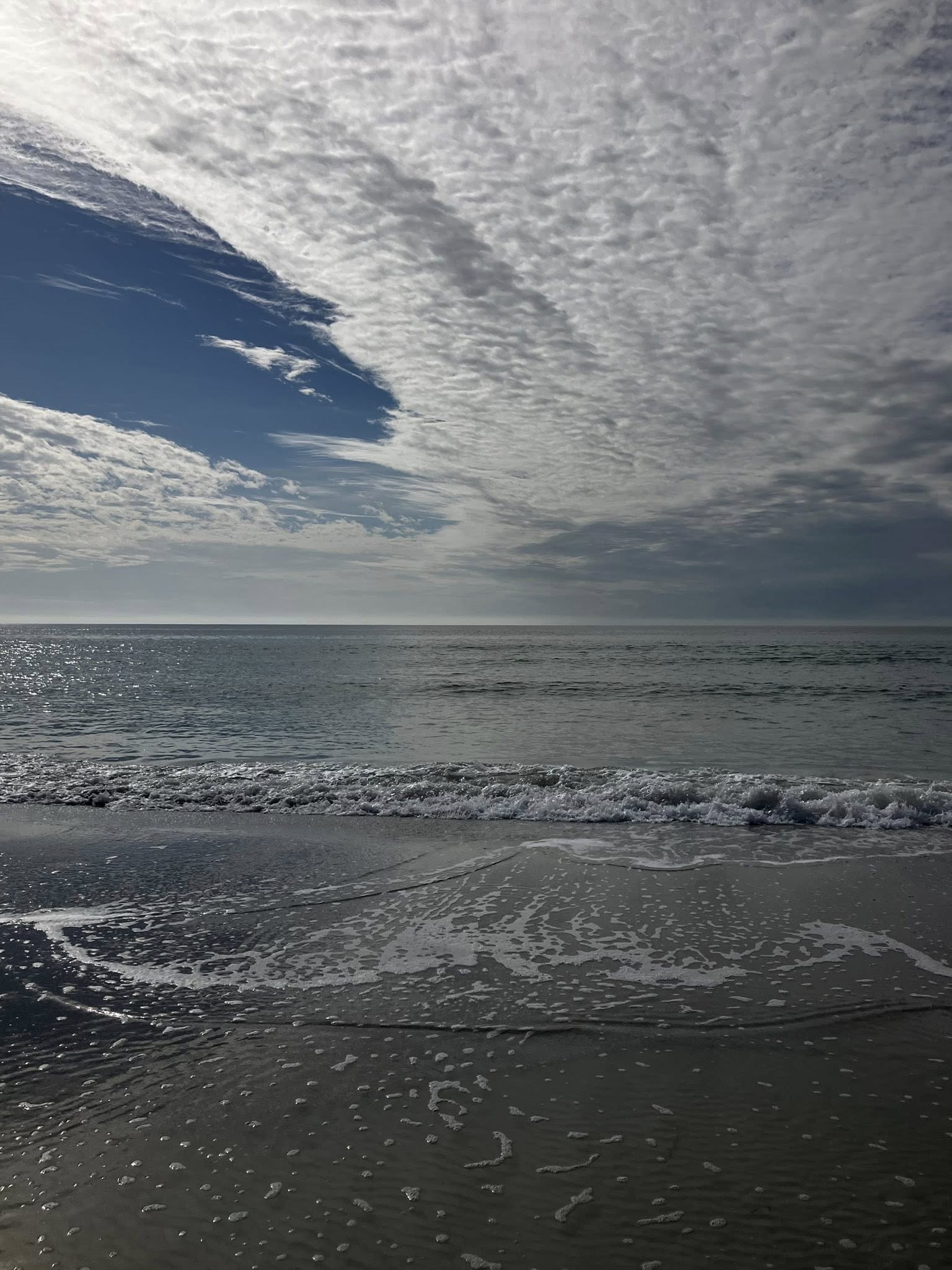

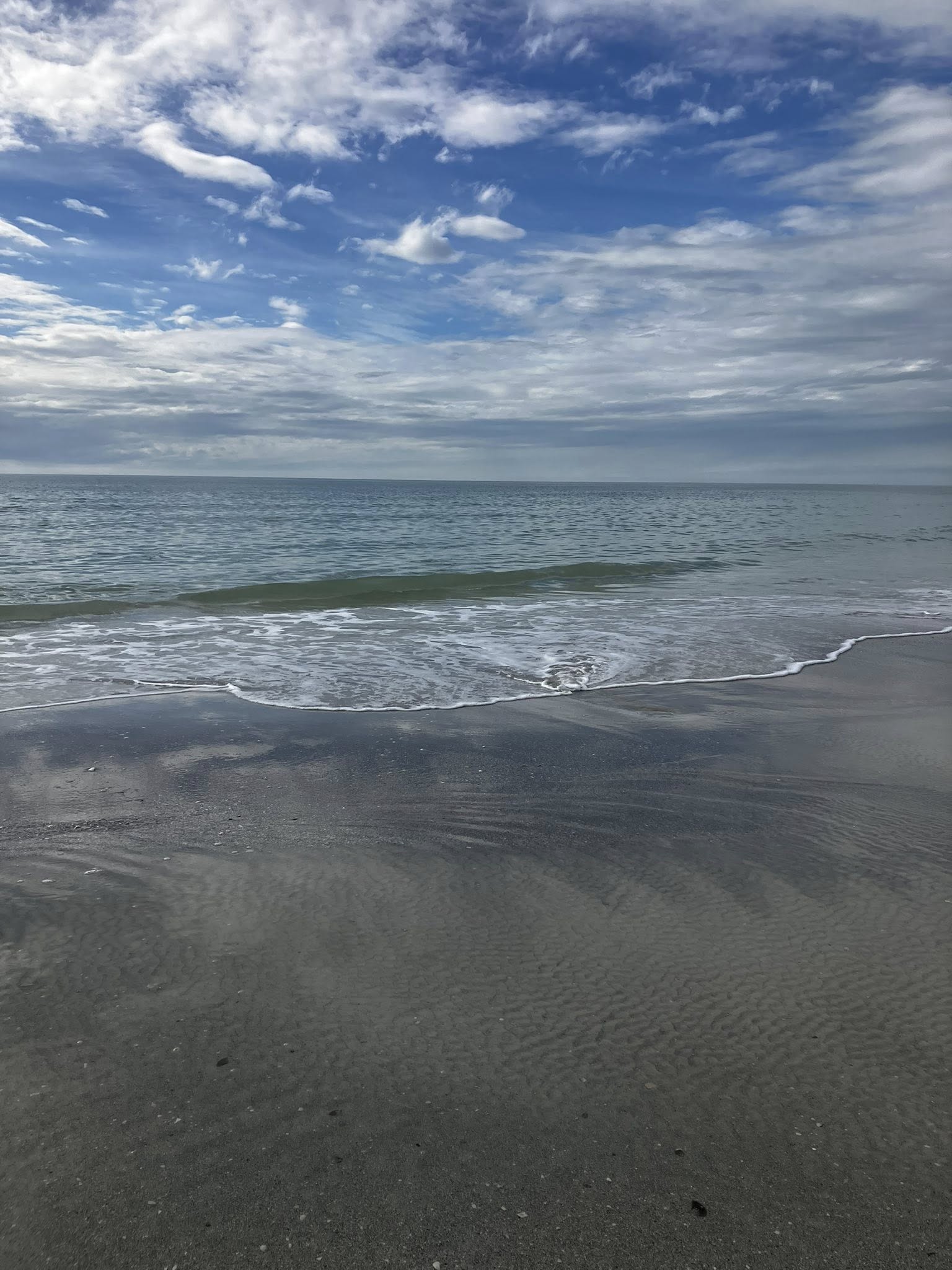
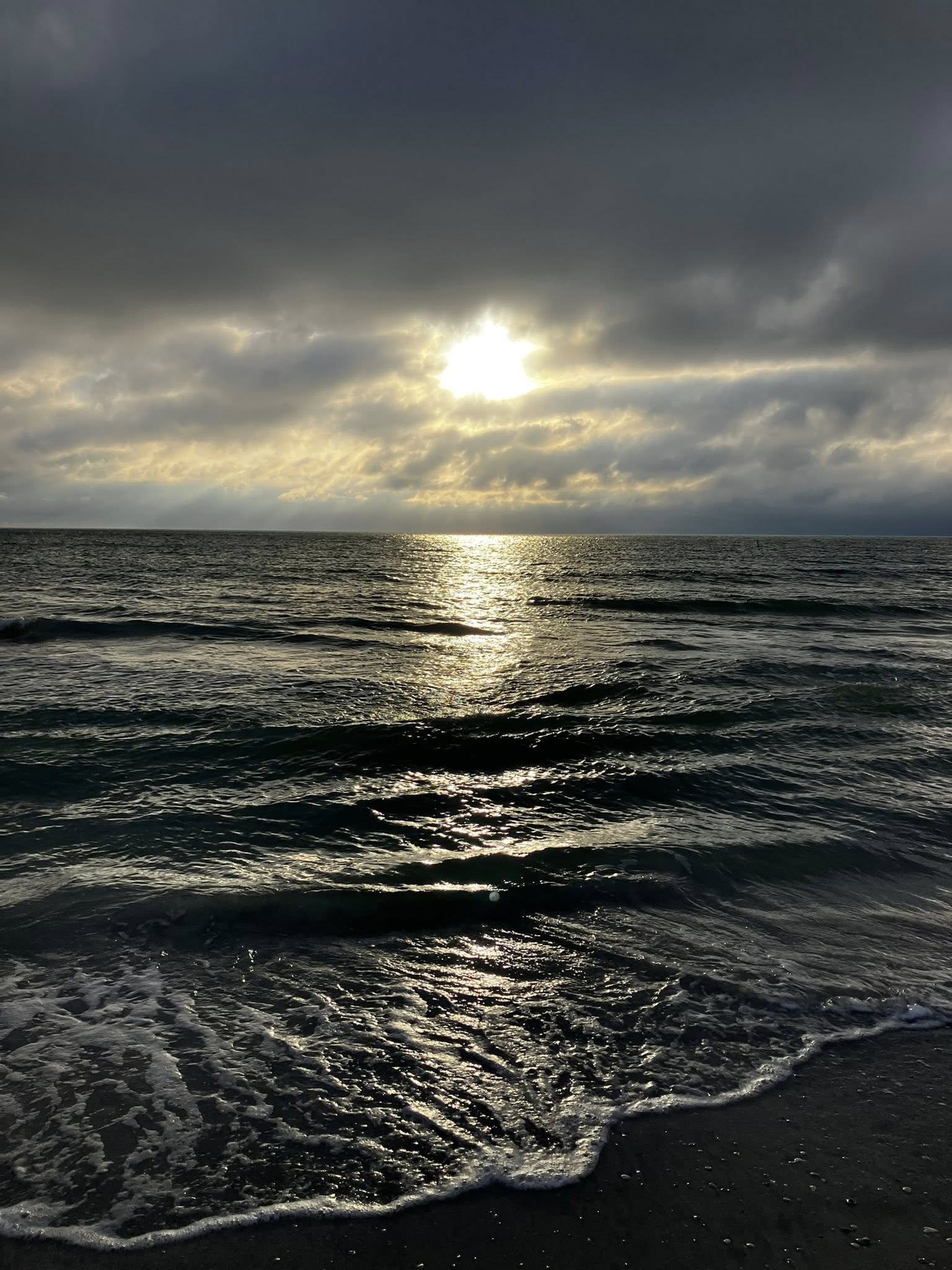

A few pictures from my beach getaway, and one of my new friend…

 Thin Air, High Hope
Leave a reply to Meagan Cancel reply