
I recently shared a striking statistic on my Facebook page. The quote ended with: “Despite ranking as one of the richest countries in the OECD, the U.S. is roughly on par with Mexico when it comes to childhood poverty.”
This revelation shocked me profoundly. How can we be one of the wealthiest nations globally and still have such a staggering rate of childhood poverty? It highlighted the extreme wealth disparity within our nation.
However, what impacted me even more was the response I received after posting this quote. I was moved by the genuine discussions that unfolded in the comments. Many joined the conversation with a resounding, “What can we do?” One woman even expressed feeling overwhelmed and powerless when confronted with statistics like this. I realized I often feel powerless too when I come across such disheartening data. I spend a lot of time researching numbers related to the harsh outcomes associated with poverty.
So, the question arises: “What can we do?” Or, more personally, “What can I do?”
I deeply appreciate those who ask this question. Isn’t it the first step? Acknowledging that these statistics aren’t just numbers but represent real people who deserve our attention?
In this post, I want to offer a few ideas on how to respond when faced with the overwhelming inequality and poverty in the world. This list is by no means exhaustive, and I’m sure there are even better ideas out there (please share your suggestions in the comments below). Nevertheless, these are concepts I hold onto as I seek answers for myself.
1. Do something. Anything.
You might be familiar with the story of the starfish. In various versions, a young boy spends his morning tossing starfish, one by one, back into the ocean. An elderly man questions him, looking at the thousands of starfish on the beach, and asks, “How can you possibly make a difference?” The boy picks up another starfish, tosses it into the sea, and replies, “I made a difference to that one.”
You don’t have to save everyone. You don’t need to change policies or rewrite laws. But you can make a difference to the cashier you see every week, the child who lives next door, or the person on the corner. You can see them. You can talk to them. You can learn who they are. There’s an incredible amount of need in our own communities. By being kind directly to the person in front of us, we can “make a difference to that one.”
2. Instill service values in your children.
Raise children who understand that this world can’t afford for anyone to live only for themselves. They have so much to offer, and using their talents and time to serve those around them is the best outcome.
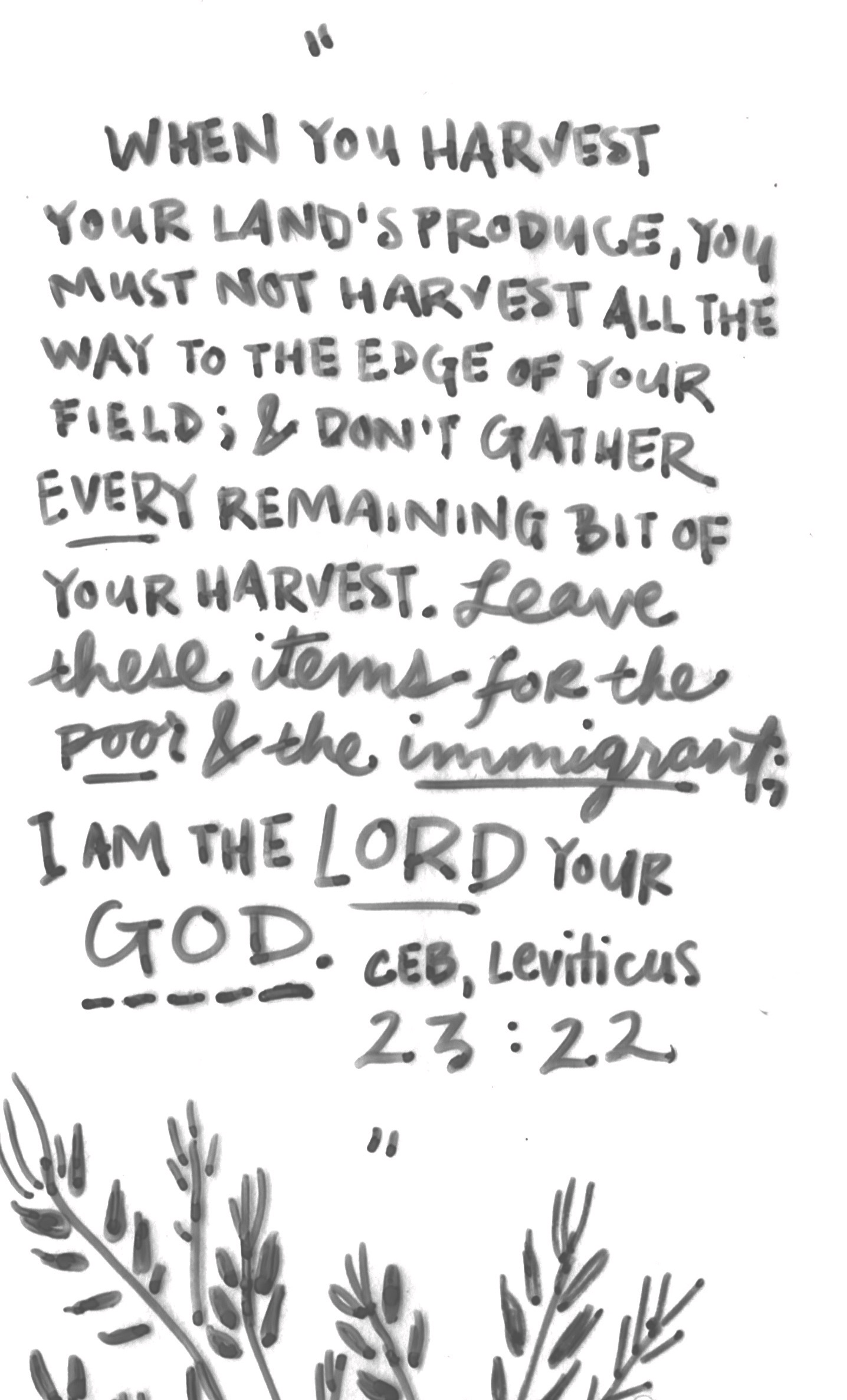 3. Don’t “glean to the edge of your fields.” Harvest.
In the Old Testament, God commanded the Israelites not to harvest everything they grew, leaving some for those in need. Similarly, don’t expend every moment of your time, emotional energy, or money solely on yourself and/or your family. Although there may be times when you need to harvest strength from someone else’s “field,” try to leave some time in your schedule, a bit of extra room in your heart, and wiggle room in your budget for those who may unexpectedly need your support.
4. **Learn about the specific needs in your community
Every community, city, and church offers numerous opportunities for us to serve, to “see” others, and to immerse ourselves in the lives of others. Practically, you can Google terms like “homeless shelter,” “rehab centers,” or “refugees” to find various opportunities that align with your interests. Instead of assuming you know the needs, reach out to organizations that pique your interest and ask if you can meet and learn more about what they do and how you might engage in their vision.
The Bible is filled with stories of individuals offering what little they had, and God multiplying it into precisely what was needed and so much more. One of my favorite verses, Zechariah 4:10, says: “Do not despise these small beginnings, for the LORD rejoices to see the work begin.” Whatever small acts of love you can find to help others, just do something. Trust that it will make a difference to “that” one, and know that God rejoices to see the work begin.
Additional thoughts
At various points in my life, IAt different times in my life, I have been able to serve in different capacities. The same might be true for you. You may need to identify what is possible for the current season of your life. When our kids were young, we absolutely loved participating in Meals on Wheels. During those years, we forged many meaningful relationships. As our kids entered school full-time, it opened up the opportunity for me to train and serve as a Child Advocate in the court system. These two experiences were vastly different, but both provided numerous chances to extend love to others.
Furthermore, I want to emphasize that caring for loved ones should never be undervalued as an act of service. Often, I speak with women who feel guilty because they aren’t actively involved in community service, yet I witness them dedicating hours to care for their elderly parents, grandparents, or a special needs child. I can’t fathom a scenario in which God would be anything but pleased with love demonstrated in that manner.
Curious…
• Are there any ideas you might add to the list above regarding ways to contribute to your community?
 Thin Air, High Hope
Leave a comment